
গঙ্গাবুড়ি / Gangaburi: A River Heritage Project 2023-24
April 01, 2023 - December 30, 2023
Rivers have always shaped human civilization,
sustaining communities, enabling trade, and nurturing culture. Bangladesh, a
land of rivers in the Bengal Delta, exemplifies this deep bond between people
and waterways. The Buriganga, once a vibrant artery of Dhaka, has suffered from
urbanization and pollution, threatening its historic and cultural vitality.
The গঙ্গাবুড়ি
/
Gangaburi: River Heritage Project – 2023 was conceived to
reflect on a shared history to create a visual narration of the Buriganga’s
cultural heritage. Seven artists and researchers participated in a seven-day
workshop at Brihatta Art Space, Hazaribagh, Dhaka, developing works inspired by
the river’s past and present. The project culminated in an exhibition that
highlighted the river’s symbolic and lived presence through art, folktales,
stories, and poetry.
Supported by EUNIC Bangladesh members—British Council, Alliance Française de Dhaka, Goethe-Institut Bangladesh, EU Delegation, Embassy of the Netherlands, and Embassy of Spain—the project, curated by Shehzad Chowdhury, draws its title from Kafil Ahmed’s song “Gangaburi.”
Programme Note
The word for "heritage" can be translated as পরম্পরা (Parampara) in
Bengali. It represents the lineage that safeguards and preserves the sacred for
the future. The Buriganga River Heritage Project, presented by the Brihatta Art
Foundation, has focused on harnessing the power of storytelling as envisioned
by seven artists to create ripples into the community's future. These art
pieces are like sacred droplets in the holy waters of our beloved Buriganga
River. Situated in the heart of Hazaribagh, a place previously known for
contributing pollutants to the river, Brihatta Art Foundation has been
transforming the ecosystem through the healing power of art. Our team shares
this intention, striving to change our mindset in how we interact with this
fundamental element of life. From the Himalayas to the Bay of Bengal, our
ancestors have continually reminded us of the value of these life channels
through their magnificent stories. May we, in our time, add to this wisdom,
cleansing these waters with our love.
Shehzad Shahriar Chowdhury
Project Curator
-
Grantees: Ahmed Rasel, Aminul Islam Ashik, Anannya Mehpar Azad, Kazi Sydul Karim Tuso, Md. Khairul Alam Shada, Nur A Aala Siddique, Shamim Ahmed Chowdhury
Project Curator: Shehzad Chowdhury
Assistant Curators: Sabiha Ambareen Haque, Taiara Farhana Tareque, Tirtha Saha
Workshop
September 15 - September 21 , 2023
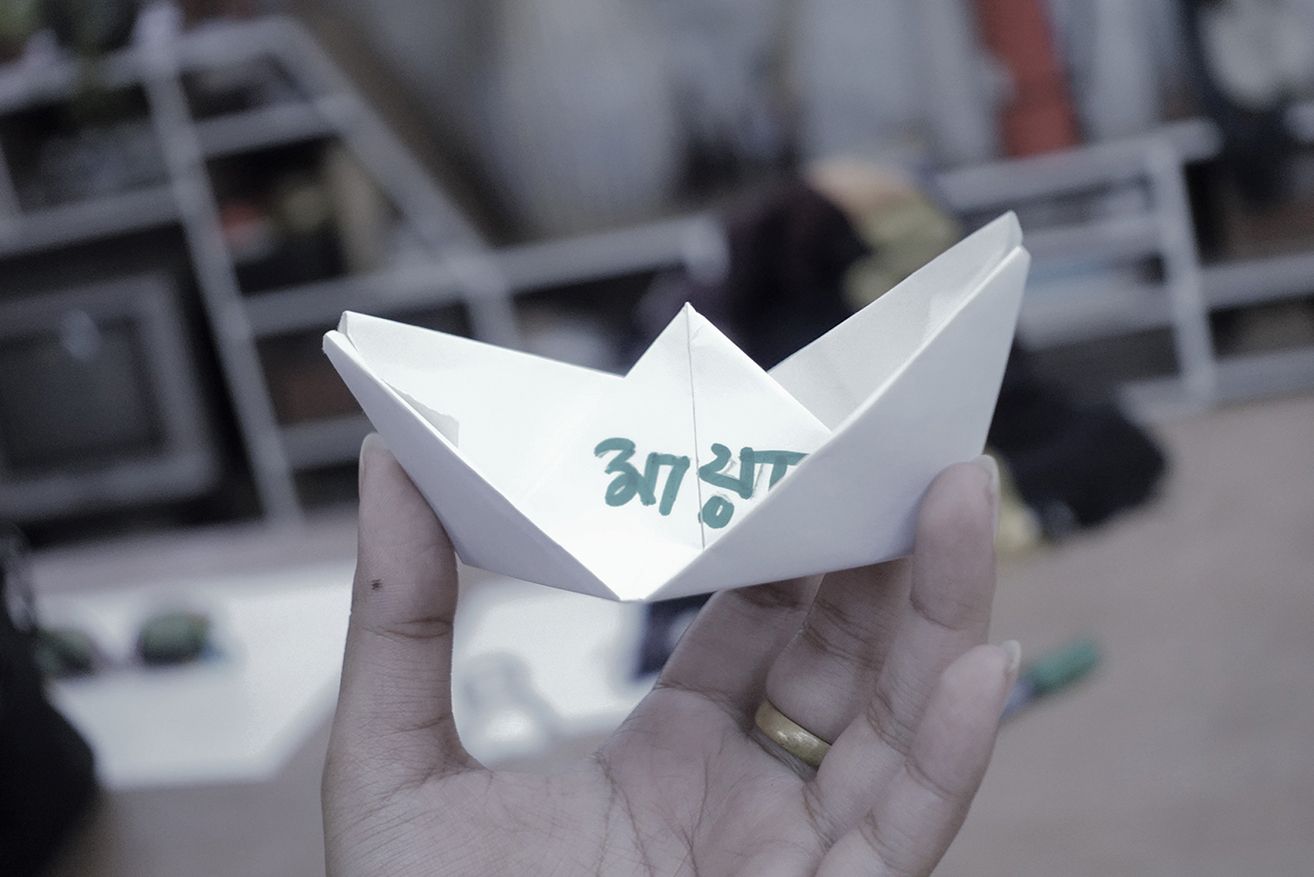
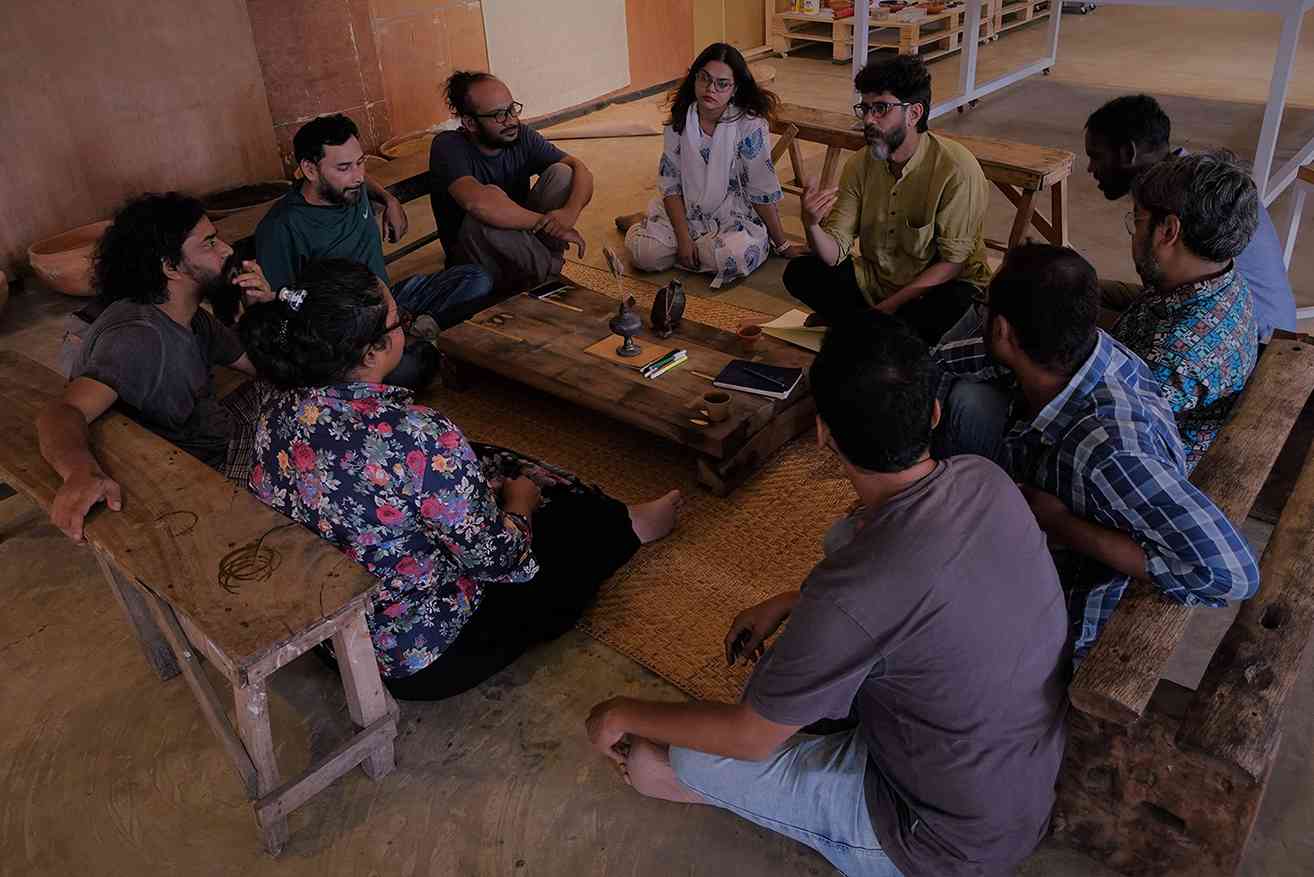
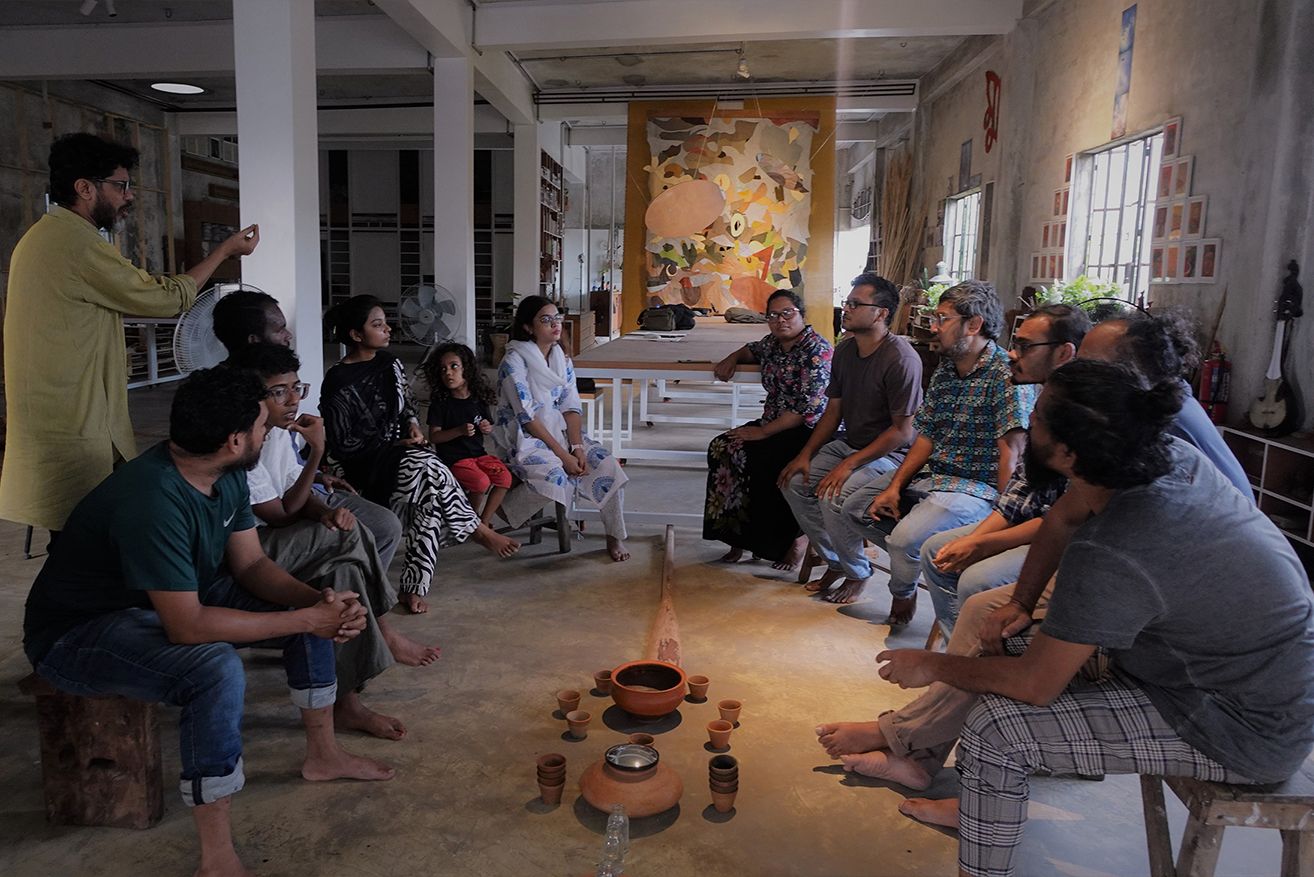
River Heritage Project began with a week-long
workshop that introduced participating artists to the historical, cultural, and
environmental contexts of the Buriganga River. Through fieldwork, site visits,
and group discussions, artists explored the river’s layered narratives—its
heritage, its communities, and the challenges it faces today. This immersive
process laid the foundation for collaborative dialogue and creative responses,
shaping the direction of the artworks developed in later phases.




গঙ্গাবুড়ি / Gangaburi: River Heritage Exhibition – 2023
08 December – 30 December, 2023 | Brihatta Art Space, Hazaribagh, Dhaka
The গঙ্গাবুড়ি
/ Gangaburi:
River Heritage Project – 2023 culminated in an exhibition
at Brihatta
Art Space, where seven artists and researchers
presented works inspired by the Buriganga’s layered past and present. Through
paintings, installations, stories, folktales, and poetry, the exhibition sought
to reimagine the river as both symbol and lived reality, a reminder of its
cultural significance and a call for renewal.
Supported by EUNIC Bangladesh members—British Council, Alliance Française de Dhaka, Goethe-Institut Bangladesh, EU Delegation, Embassy of the Netherlands, and Embassy of Spain—the exhibition reflected on our shared history and the possibility of transforming loss into resilience. Curated by Shehzad Chowdhury and titled after Kafil Ahmed’s song “Gangaburi”, the project invited audiences to connect with the river through the language of art and memory.
মেমোরিজ অফ ওয়াটার / Memories of Water
Ahmed Rasel
Since
2015, artist Ahmed Rasel has been documenting Dhaka’s collective memories with
its waterbodies, using metaphors and symbols to explore people’s lives,
struggles, and relationships with water. His project reflects on the city’s
shifting landscape, where wetlands, ponds, and canals have diminished by nearly
40% due to encroachment and rapid urbanization—causing pollution, waterlogging,
and health crises.
The work centers on the Buriganga River (Amin Bazar to Hasnabad), tracing its cultural and historical ties with Dhaka. From landing piers, makeshift boat houses, and paddle steamers to colonial remnants, Rasel captures the river’s layered stories of survival and change. The metaphor of a broken aquarium evokes Dhaka’s transition from a water-rich past to a nostalgic struggle for its aquatic heritage, offering a poetic reflection on memory, resilience, and loss.

ফ্লো অফ ড্রিমস / Flow of Dreams
Aminul Islam Ashik
Born in the Bengal Delta, Bangladesh is weaved with numerous rivers. Dhaka emerged as a city by the river Buriganga and housed native fishes, including Tenngra, Puti, Shing, Koi, etc. With passing days, Buriganga is losing its identity due to encroachment, deterioration of river water quality, and light pollution. Thousands of species are lost, and crop production is disrupted.
The artist showcases 4 interpretations of the
“Flow of Dreams” in bronze and clay sculptures. He attempts to present the lost
time of Bengal. He presents a sculptural installation with the fish in the
zigzag composition of the river with the golden fish. Due to abuse of power and
lack of awareness, the sucker is invasive in the Buriganga. The artist imagines
the missing fish in Buriganga, which will give people an idea of the past and
help raise awareness about how we are destroying Buriganga.
In the artist's own words: “I hope one day
Buriganga will regain its proper course. Waste and polluted water will no
longer fall into the riverbed. The sugar flakes will all become soil and mix.
May the Buriganga be full of golden fishes. I floated the dream on the raft and
let the local fish play in the rippling stream of Buriganga.”
Medium: Bronze and clay
Size: Flow of
Dreams 1, Size 42 x 11 x 5-inch, Media Bronze, Year 2023; Flow of Dreams 2,
Size 14 x 11 x 7-inch, Media Bronze, Year 2023; Flow of Dreams 3, Size 12 x
10 x 7 feet, Media Clay Casting, Year 2023; Flow of Dreams 4, Size 25 x 114 x
5-inch, Media Bronze, Year 2023
Collaborators: Humaira Koli, Mainuddin Nahid, Soleman, Sumon Ahmed, Safiuddin, Nazrul Islam, Zakir Hossain

শীতলক্ষ্যার সাতকাহন / Shitalakshyar Shatkahon
Anannya Mehpar Azad
শীতলক্ষ্যার সাতকাহন / Shitalakshyar Shatkahon," translating to the grand affair of the Shitalakshya River, delves into the mythological resonance of the river often identified with the Buriganga. The artist's vision unfolds through two distinct depictions of the Buriganga, symbolizing its evolution over time. One portrays a young female figure representing the earlier state of the river, while the other embodies an aged female figure symbolizing the current, almost lifeless state of the river.
Nature takes center stage in this visual
narrative, with delicate flowers forming flowing hair and a diverse array of
animals crafting the body of the figures. The artist employs Bangladeshi
organza silk fabric as the drawing base.
On the Firoza panel, the artist captures the
early state of the river, portraying it as a young, youthful woman teeming with
life. Elements of the river and its once-abundant birdlife are intricately
woven into the composition, emphasizing the extinction that has occurred over
time.
The Magenta organza panel depicts the current
state of the river – the aging BuriGanga. Despite its present desolation, the
environment surrounding it continues to thrive, showcasing nature's resilience.
Mughal motifs and characters are seamlessly
incorporated into the artwork, intertwining the history of the Old Ganges with
the rich heritage of the Mughal dynasty and culture. Contrasting colors in the
background illustrate the dynamic environment of the location, while Karchhob
embroidery, a traditional art form in Dhaka, adds a distinctive layer to the
painting.
These two artworks serve as a poignant
reflection on the golden era of this region, suggesting the potential for a
rejuvenated future for the river, and encouraging the hope of reclaiming its
former vitality. " শীতলক্ষ্যার
সাতকাহন /
Shitalakshyar
Shatkahon " stands as a visual chronicle, urging
viewers to contemplate the cyclical nature of life and the possibility of renewal
in the face of adversity.
Credits: yousuf -
karchupi karigor
Size:
120X45 inches (each panel) 2 pcs
Medium:
Acryamine color and acrylic color on silk organza

কাউরা / Kawra
Kazi Sydul Karim Tuso
Inspired by the integral role bamboo plays along the riverbanks, the pavilion draws from traditional bamboo crafts such as 'Kaura' and 'Paicha’. Kaura represents the art of traditional bamboo weaving, while ‘Paicha’ captures the essence of a random weaving pattern, resembling the buckets used along the river for carrying goods.
These weaving techniques transcend time, culture, and national boundaries, offering residents a tangible link to the endangered art of weaving that is slowly disappearing from our daily lives. The project serves as a poignant reminder of the need to preserve both the river and the cultural heritage intertwined with it.The design of the bamboo pavilion takes inspiration from the natural flows of the Buriganga River, reflecting its undulating form and meandering currents. Bamboo, known for its flexibility and strength, is strategically used to capture the fluidity of the water, symbolizing resilience in the face of environmental challenges.
The artist is grateful for all the help of the local artisans who have contributed to the weaving and making of this Pavilion from the village of Puthiazani and Borotia of Manikganj.
Special thanks to: Britto Arts
Trust, Kaliganga Art Institute, Mohammad Monsur Mia, Mohammad Alam Mia, Ataur
Rahman Ashik, Brahman Sujon, Brahmon Pashan Maloti Rani, and Lata Begum.
Credits:
Special thanks to: Britto Arts Trust, Kaliganga Art Institute
Team:
Mohammad Monsur Mia, Mohammad Alam Mia, Ataur Rahman Ashik Brahman, Sujon Brahman,
Pashan Maloti Rani, Lata Begum

ইটাগঙ্গা / Itaganga
Md. Khairul Alam Shada
ইটাগঙ্গা / Itaganga reflects on the fragile relationship between cities and the rivers that once shaped them, focusing on the Buriganga. The artist was struck by the suffocating presence of brick structures along its banks, symbolizing how “civilization” chokes the river’s spirit.
Using boat-shaped bricks—both cradling and
constricting water—he captures the tension between urban growth and natural
flow. The city built atop these bricks embodies both progress and domination,
while yearning to release the river from its brick confines.
This work stands as a poetic call to
reconsider how development encroaches on rivers, leaving space for viewers to
form their own emotional response.
Credits:
Copyrighting-Alexandra Münzner
Team:
Matin, Afzal
Medium:
Bricks
Size:
6 feet x 3 feet 3 inch

মেটামরফোসিস / Metamorphosis
Nur A Alaa Siddique
Along
the Buriganga
River,
the artist reimagines construction debris and plastic waste not as decay, but
as raw material for renewal. Salvaged bricks from demolished sites and
single-use plastics from landfills are reassembled into modular lines that
intertwine like the metamorphosis of a caterpillar into a butterfly.
Metal rods provide structure while symbolizing legs, and phalange-like extensions suggest a vibrant future emerging from the ruins. The work reflects on the cycle of construction and deconstruction, envisioning a city reborn from its rubble into harmony and growth.
Medium: Brick and
single-use plastic
Credits:
Sandwich Dhaka — Mojahid Musa, Hosne Mobarak Munna, Arbhi Kazi, Sabiha Haque

এপার- ওপার / Epar-Opar
Shamim Ahmed Chowdhury
এপার-ওপার
/ Epar-Opar," translating to the mystical alternate
of extremes, unfolds as a narrative that transcends the present into the
afterlife, stretching from one bank of the river to the other. It exists in the
duality of emotions, physical space, and time.
In the winter of 2010, the tranquil ambiance
of Sowarighat became the artist’s refuge from the challenges of student life.
Amidst this serenity, a mysterious encounter unfolded. A voice inquired about a
lost daughter, and the watery sparkle in the eyes of the seeker left a lasting
impression. His relentless search for the missing girl continued, questioning
every stranger he encountered.
As the person disappeared from his sight, the
lingering mystery persisted. Beyond Eid, the man tirelessly traverses the
riverbank, engrossed in the quest for his lost daughter. The narrative unfolds
through characters and events, capturing the essence of reality, while the
unexplored dimensions remain a realm of imagination manifested in my drawings
and narrative. "Epar-Opar" becomes a tale that stretches beyond
borders, exploring the intricate interplay of the seen and the unseen.
Credits: Story
development: Masudul Haque; Soundscape: Suhas Nahian; Writer family and
the man from the riverbank; Molla Sagor’s Film of the song
"Gangaburi" by Kafil Ahmed and Brihatta Team
Size: Panel
painting 22x28in (6 pcs); Handmade book 11x14in; Folded graphic novel book
14in with 8ft long
Medium: Pen and ink with watercolor on handmade paper
